
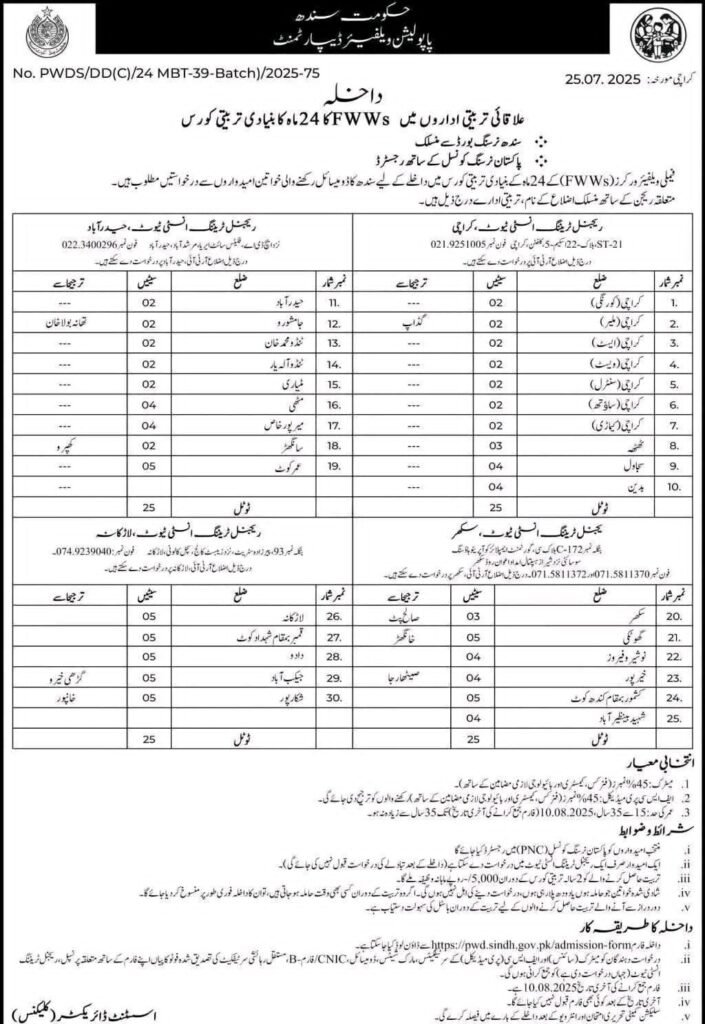
Training Course for Family Welfare Workers in Sindh. The Population Welfare Department Sindh has officially announced a 24-month training course for Family Welfare Workers, complete with a monthly stipend of PKR 5,000 during the training period. Let’s break down all the exciting details!
READ MORE:Teaching Jobs in KPK Education Department Apply Now
About the Population Welfare Department, Sindh– Training course for Family Welfare Workers
The Population Welfare Department, Sindh has long been at the forefront of promoting reproductive health, family planning, and gender equity. With a growing demand for trained professionals, the department is committed to empowering young individuals—especially women—through practical education and job-ready training.
Their recent push includes expanding training access across Sindh to ensure each community has skilled Family Welfare Workers (FWWs) supporting reproductive health initiatives.
READ MORE: Punjab Bureau of Statistics Jobs 2025 Apply Now
Overview of the Training Program– Training course for Family Welfare Workers
The Family Welfare Worker Training Course is a comprehensive two-year program designed to develop skilled professionals who can contribute to community welfare services. The course is:
- Approved by PNC (Pakistan Nursing Council)
- Affiliated with SNEB (Sindh Nurses Examination Board)
This means you’re not just getting any certificate—you’re stepping into a professional journey recognized nationwide.
READ MORE: CM Internship Program Punjab 2025 Apply Now
Key Features of the Program– Training course for Family Welfare Workers
- 🕐 Duration: 24 months
- 💸 Stipend: PKR 5,000/month during training
- 📚 Curriculum: Blend of theoretical knowledge and practical training
- 🏥 Fieldwork: Real-time experience in community and healthcare centers
- ✅ Recognized Certificate: Ensures better job placement
Duration and Curriculum Breakdown– Training course for Family Welfare Workers
Over two years, the course covers all essential areas of family health and reproductive care.
First Year Curriculum
- Reproductive Health Basics
- Family Planning Techniques
- Anatomy & Physiology
- Introduction to Public Health
- Communication and Counseling Skills
Second Year Curriculum
- Hands-on Field Training
- Advanced Counseling Techniques
- Case Studies and Research Work
- Community Mobilization and Outreach
This structure ensures that trainees are not only informed but well-practiced before entering the workforce.
Eligibility Criteria for Training Course for Family Welfare Workers
Wondering if you’re eligible? Here’s what you need:
- Gender: Female applicants are highly encouraged
- Age Limit: 15 to 30 years (may vary slightly by district)
- Education: Minimum matriculation (science preferred)
- Domicile: Must be a resident of Sindh
- Marital Status: Both married and unmarried women may apply
How to Apply– Training course for Family Welfare Workers
Follow these simple steps:
- Collect Application Form from the nearest Population Welfare Office or download it from the official website.
- Attach Documents:
- CNIC or B-form
- Matriculation certificate
- Domicile and PRC
- Passport-size photos
- Submit Form to your district’s training center before the deadline.
⏳ Deadline: 10 August 2025
Deadline and Important Dates
- Last Date to Apply: 10 August 2025
- Interviews/Tests (if any): Will be announced district-wise
- Training Commencement: Likely from September 2025
Don’t delay—seats are limited and competition is strong!
Financial Benefits
Apart from the free training and certification, selected candidates will receive:
- A monthly stipend of PKR 5,000
- Training material and access to health resources
- Support from qualified trainers and health professionals
This financial support is intended to ease the economic burden and make training accessible to all deserving candidates.
Career Opportunities After Training
After successful completion, you’ll have numerous doors open for employment:
- Government Health Departments
- Population Welfare Centers
- NGOs working in health and family planning
- Private Clinics and Hospitals
Many graduates find permanent government roles, while others continue supporting local communities as trained volunteers or contract workers.
Why Choose This Course?
- 🔹 It’s FREE and GOVERNMENT-BACKED
- 🔹 Comes with a monthly stipend
- 🔹 Leads to professional certifications
- 🔹 Empowers you with in-demand healthcare skills
- 🔹 Enhances women’s role in society
Think of it like investing two years to unlock a lifetime of opportunities and impact.
Testimonials from Past Trainees
“Before this course, I had no career direction. Now, I’m a trained FWW in my community and helping women access reproductive health services.”
— Sana B., Hyderabad
“The trainers were supportive and the stipend helped me continue my education without financial stress.”
— Ayesha K., Sukkur
These testimonials are proof that this course is not just theoretical—it transforms lives.
Conclusion
If you’re a young woman in Sindh looking for a life-changing career, this training course is the perfect launchpad. With solid training, financial assistance, and certified credentials, you’re set up for a stable future in healthcare and social service. The clock is ticking, and the last date is August 10, 2025. Don’t miss this empowering opportunity—apply now and take the first step toward a brighter future!
FAQs
1. Is this course only for women?
Yes, this specific training is primarily for women to strengthen female participation in community health roles.
2. Can married women apply?
Yes, both married and unmarried women are eligible as long as they meet the age and education criteria.
3. Will accommodation be provided during the course?
This varies by district, but some centers may offer hostel facilities or commuting allowances.
4. What happens after the training ends?
Graduates may be hired in government family welfare centers, NGOs, or referred to relevant job openings.
5. How can I check if my district is offering this course?
Visit your local Population Welfare Office or contact their helpline for district-wise seat availability.